
Telepsychiatry is not just a technical possibility to conduct a consultation through a screen. Its greatest value lies in the fact that it changes the accessibility of psychiatric care and the way patients reach therapists. The advantages of telepsychiatry are not only organizational or economic, but also clinical, psychological, professional, societal, and public health–related.
Telepsychiatry does not replace psychiatry — it extends psychiatry.
The advantages of telepsychiatry can be grouped into several categories:
1. Patient Advantages
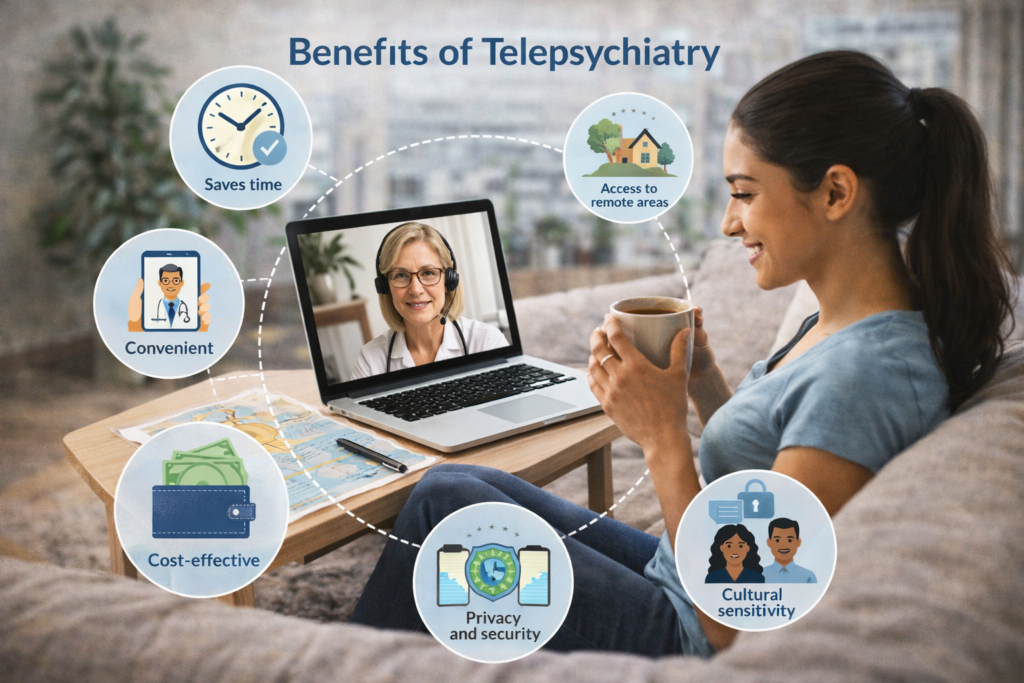
Accessibility of Treatment
One of the greatest advantages of telepsychiatry is accessibility. Patients who live in small towns, on islands, in mountainous areas, rural regions, or in other countries can receive psychiatric care without traveling. Telepsychiatry reduces geographical barriers and inequality in access to mental health care.
Treatment in One’s Native Language
Telepsychiatry allows patients to receive treatment in their native language by connecting them with therapists who speak the same language, regardless of geographical location. This improves communication, diagnostics, therapeutic alliance, and treatment outcomes, especially for migrants, refugees, and people living abroad.
Less Stigma
Many patients avoid visiting psychiatric clinics because of stigma. It is often easier for them to speak with a psychiatrist from their own home than to sit in a waiting room of a psychiatric clinic. Telepsychiatry therefore reduces the psychological barrier to seeking help and allows patients to enter treatment earlier.
Continuity of Treatment
Patients who travel, move, or live abroad can continue therapy with the same therapist. Telepsychiatry enables continuity of treatment, which is particularly important in chronic psychiatric disorders, psychotherapy, and long-term therapeutic relationships.
Saving Time and Money
Telepsychiatry saves time and money for patients because there is no travel, no waiting rooms, and no loss of a working day. Patients save money on transportation, parking, accommodation, childcare, and absence from work.
Reduced Transportation Barriers
Telepsychiatry reduces transportation barriers such as long travel distances, lack of transportation, physical illness or disability, driving while ill or sedated, anxiety related to travel, and agoraphobia.
Better Insight into the Patient’s Environment
Telepsychiatry sometimes provides better insight into a patient’s life than office visits because the patient speaks from their home environment. Clinicians may gain insight into living conditions, family environment, lifestyle, and daily functioning.
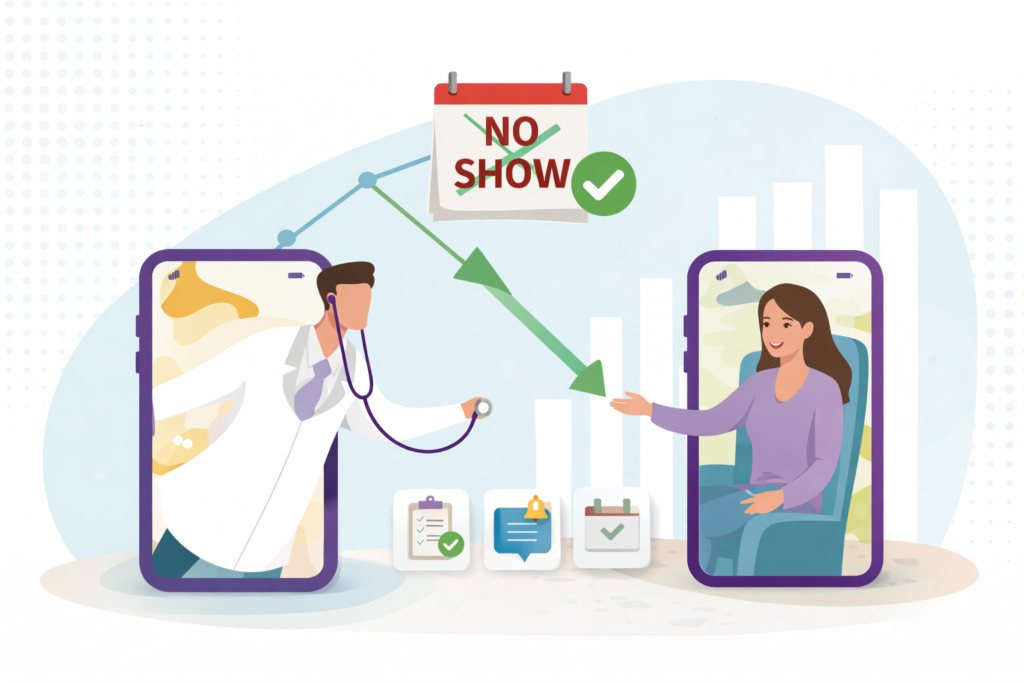
Reduced No-Show Rates
Telepsychiatry significantly reduces missed appointments. When patients do not need to travel, take time off work, or organize transportation and childcare, they are more likely to attend appointments regularly.
2. Professional Advantages
Flexible Working Conditions
Telepsychiatry allows flexible working hours, remote work, and better organization of working time. This improves work-life balance for mental health professionals.
Prevention of Burnout
Flexible scheduling, remote work, reduced commuting, and better control over working time can contribute to the prevention of burnout among psychiatrists and therapists.
Reduced Occupational Hazards
Telepsychiatry can reduce certain occupational risks, such as working with violent or severely agitated patients, exposure to aggressive behavior, and emotional exhaustion from continuous intense in-person interactions.
Better Use of Professional Time
Telepsychiatry reduces travel between institutions, allows shorter consultations when appropriate, and improves overall efficiency of professional work.
3. System Advantages (Health Care System)
Better Use of Professional Resources
Telepsychiatry allows better distribution of scarce professional resources. Psychiatrists and other mental health professionals can work across regions and even across countries.
This allows:
- Better distribution of specialists
- Access to subspecialists
- Faster consultations
- Reduced waiting lists
- Improved collaboration between institutions
Improved Collaboration Between Institutions
Telepsychiatry facilitates collaboration between hospitals, outpatient clinics, primary care, social services, and private practice. It also improves cooperation between the public and private sectors.
Hybrid Model of Care
Telepsychiatry enables the development of hybrid models that combine face-to-face consultations, institutional telepsychiatry, and home telepsychiatry. This allows more flexible, patient-centered, and efficient mental health care.
4. Societal Advantages
Reduction of Inequality in Access to Mental Health Care
Telepsychiatry reduces inequality between urban and rural areas, between developed and developing regions, and between countries with different numbers of mental health professionals.
Environmental Impact
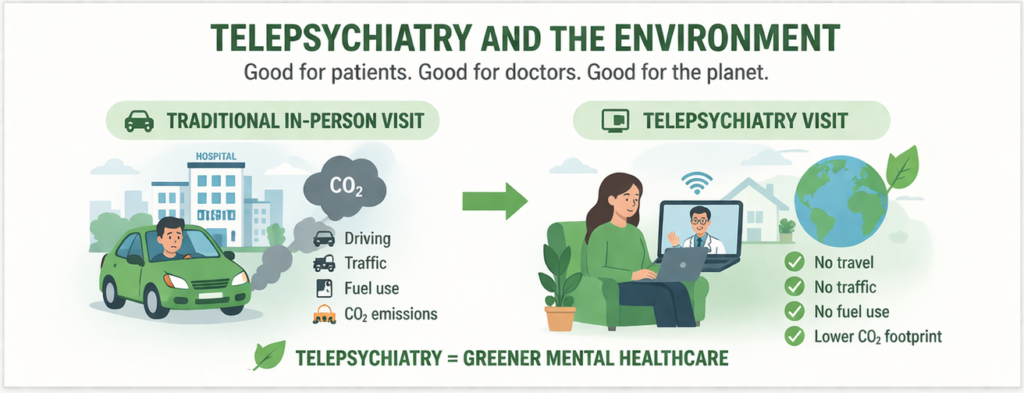
Telepsychiatry reduces travel and therefore reduces CO₂ emissions. Telepsychiatry can be considered part of environmentally sustainable healthcare and green healthcare systems.
Telepsychiatry Without Borders
Telepsychiatry allows mental health care across national borders, improves international collaboration, enables education and supervision, and allows exchange of expertise globally.
Telepsychiatry therefore contributes not only to healthcare systems but also to global mental health.
5. Public Health Advantages
Prevention of Infection and Spread of Infectious Diseases
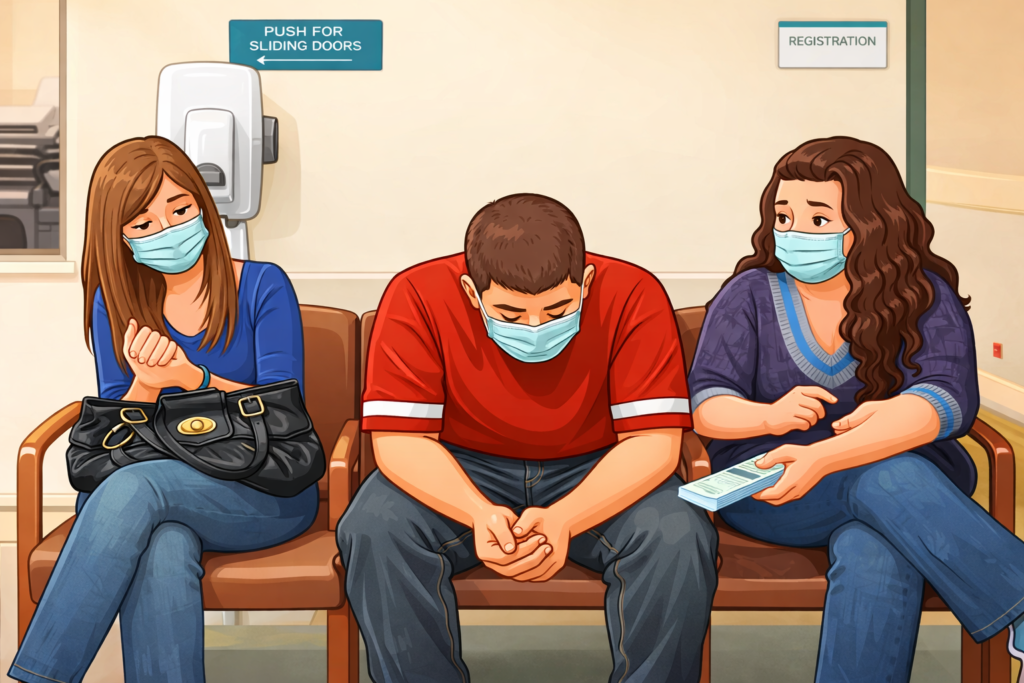
Telepsychiatry reduces physical contact in waiting rooms, hospitals, clinics, and public transport, thereby reducing the risk of spreading infectious diseases such as influenza, COVID-19, and other contagious illnesses.
It protects both patients and healthcare professionals and represents an important public health benefit, especially during epidemics and pandemics.
Continuity of Care During Crises
Telepsychiatry proved to be particularly important during pandemics, wars, natural disasters, and other crisis situations. It allows treatment to continue even when movement is restricted or institutions are closed.
Final Reflection
Perhaps the greatest advantage of telepsychiatry can be expressed in one simple sentence:
Telepsychiatry does not bring the patient to the psychiatrist.
Telepsychiatry brings psychiatry to the patient.
And in doing so, telepsychiatry does not only change the place where treatment takes place; it changes the way we organize, deliver, and experience mental health care. In that sense, telepsychiatry is not merely a technological innovation, but also a clinical, organizational, professional, economic, societal, and public health innovation in mental health care.
Three questions for the road:
- What do you see as the greatest advantage of telepsychiatry?
- Does a screen create distance between people, or can it sometimes create closeness?
- If you could choose, would you prefer therapy in person or online?
Further Reading
Hilty DM et al. The effectiveness of telemental health: A 2013 review.
Hubley S et al. Review of key telepsychiatry outcomes.
Bashshur RL et al. The empirical evidence for telemedicine interventions in mental disorders.
Bulkes NZ et al. Comparing efficacy of telehealth to in-person mental health care.