
Digital Psychiatry for Medical Students, Psychiatry Residents & Mental Health Professionals
Digital technologies are changing psychiatric practice faster than formal education can often adapt. My educational work focuses on the competencies clinicians need to use telepsychiatry, artificial intelligence, mHealth and other digital tools safely, ethically and effectively.
A growing part of my work is dedicated to the development of competency-based Digital Psychiatry education for medical students and psychiatry residents, as well as professional training for clinicians already in practice
Teaching · Curriculum Development · Workshops · Professional Education
MEDICAL STUDENTS
Introduction to Digital Mental Health, clinical use of digital technologies, ethics, safety, evidence and future professional competencies.
PSYCHIATRY RESIDENTS
Clinical application of telepsychiatry, AI, mHealth, digital ethics, patient safety, implementation and professional responsibility.
MENTAL HEALTH PROFESSIONALS
Continuing professional education, workshops, faculty development and implementation support for digitally enabled psychiatric care.
WHY DIGITAL PSYCHIATRY EDUCATION
Digital technologies are increasingly becoming part of routine psychiatric care. Future clinicians therefore need more than technical familiarity with digital tools.
They need to understand when digital approaches are clinically appropriate, how to evaluate evidence, how to recognize limitations and risks, and how to maintain patient safety, professional responsibility and the therapeutic relationship.
Education should prepare clinicians to use technology critically and responsibly — not simply teach them how to operate digital tools.
CORE CURRICULUM AREAS
01
FOUNDATIONS OF DIGITAL MENTAL HEALTH
Core concepts, evidence, digital clinical competencies and the changing role of the psychiatrist.
02
TELEPSYCHIATRY & HYBRID CARE
Clinical assessment and treatment by video, therapeutic relationship, suitability, limitations and hybrid models.
03
ARTIFICIAL INTELLIGENCE IN PSYCHIATRY
Clinical applications, evidence, limitations, bias, explainability, human oversight and professional responsibility.
04
mHEALTH & DIGITAL TECHNOLOGIES
Mobile apps, digital monitoring, connected technologies and their potential roles in assessment, treatment and follow-up.
05
ETHICS, SAFETY & RESPONSIBILITY
Privacy, data protection, consent, patient safety, clinical accountability and responsible use of digital systems.
06
IMPLEMENTATION & CLINICAL WORKFLOW
How digital tools are introduced into real healthcare systems, including adoption, quality, workflow and evaluation.
07
CULTURE, EQUITY & GLOBAL ACCESS
Digital divide, language and cultural matching, cultural safety, access barriers and cross-border / international perspectives.
CURRENT FOCUS
A current focus of my work is the development of competency-based educational concepts in Digital Psychiatry for medical students and psychiatry residents.
The aim is to integrate digital competencies into medical and specialist psychiatric education in a clinically meaningful way — linking technology with evidence, ethics, patient safety, implementation and professional responsibility.
I welcome collaboration with universities, medical schools, psychiatric training programmes and professional organisations interested in developing or strengthening education in this field.
TEACHING & COLLABORATION FORMAT
INVITED LECTURES
Single lecture or guest teaching
WORKSHOPS
Interactive sessions for students / residents
FACULTY DEVELOPMENT
Support for teachers and supervisors
CURRICULUM DEVELOPMENT
Design of Digital Psychiatry teaching
CME / PROFESSIONAL EDUCATION
Training for practicing clinicians
ADVISORY / IMPLEMENTATION
Digital Mental Health education strategy
WHY COLLABORATE WITH ME
My approach to Digital Psychiatry education is grounded in more than two decades of clinical and academic experience in telepsychiatry and Digital Mental Health.
This experience spans transcultural and cross-border telepsychiatry, research and guideline development, international professional collaboration, and current leadership of the WPA Digital Mental Health Section.
My educational focus is not on technology in isolation, but on how digital tools can be meaningfully integrated into safe, evidence-informed and culturally responsive psychiatric practice.
EXAMPLES OF LECTURE / WORKSHOP TOPICS
- Digital Mental Health: What Future Doctors Need to Know
- Telepsychiatry: From Video Consultation to Hybrid Psychiatric Care
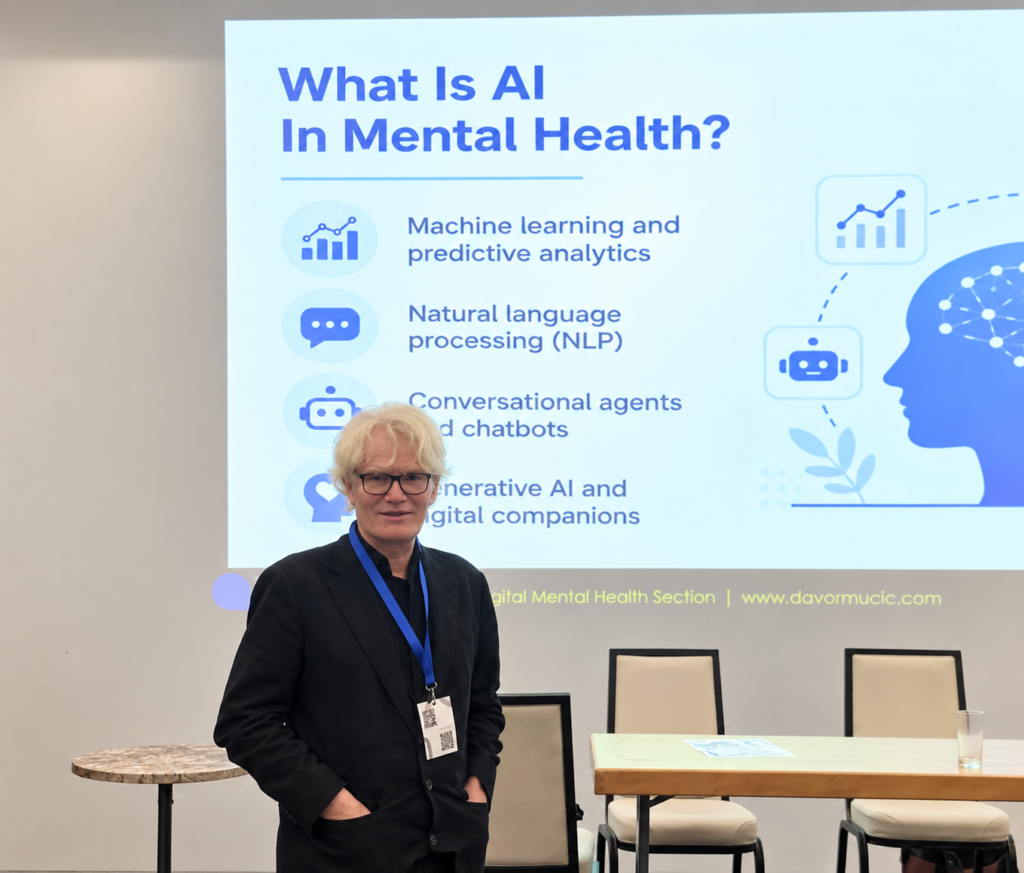
- Artificial Intelligence in Psychiatry: Opportunities, Limitations and Human Oversight
- mHealth and Digital Technologies in Mental Healthcare
- Digital Ethics, Patient Safety and Professional Responsibility
- Transcultural Telepsychiatry and Language / Cultural Matching
- Digital Divide, Equity and Cultural Safety
- Implementing Digital Mental Health in Real Clinical Services
- What Should Psychiatry Residents Learn About AI?
- Building Digital Psychiatry into Medical and Specialist Training
UNIVERSITY & EDUCATIONAL COLLABORATION
I welcome enquiries from universities, medical schools, psychiatry departments, professional organisations and healthcare institutions regarding teaching, curriculum development, workshops and collaboration in Digital Psychiatry and Digital Mental Health.